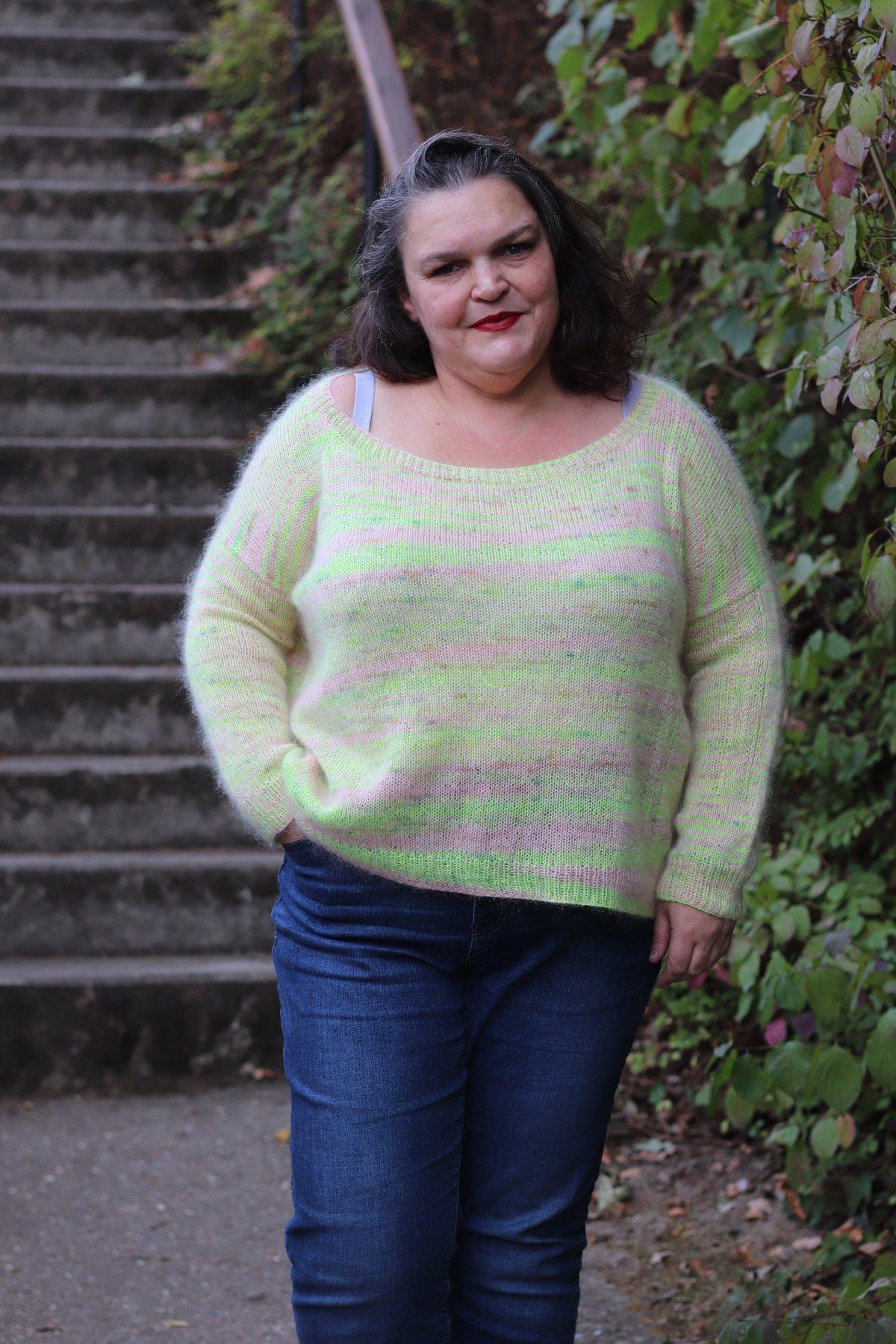
Louët: from a bouquet of mini skeins to a Mariannière
Louët began with a bouquet of mini skeins from Bulbe Bizarre. Before I had given any thought to its construction, the colours of my next Mariannière were already there in front of me.
· 3 min read
A new pattern does not always begin with a shape, a technical detail or a construction I want to explore.
Louët began with a bouquet of mini skeins from Bulbe Bizarre’s Unis de printemps collection.
A collection of colours chosen to work together, each with a personality of its own. The moment I saw them, I wanted to scatter them in small touches across a quieter background.
Louët, then, would be a marinière.
Or rather, a new Mariannière.
A fresh take on stripes
I return to stripes time and again. Their apparent simplicity leaves so much room for creativity.
Their width, rhythm, number and placement can all be changed. You can work with just two colours or bring together a whole collection of mini skeins. The construction of the garment is enough to transform their character completely.
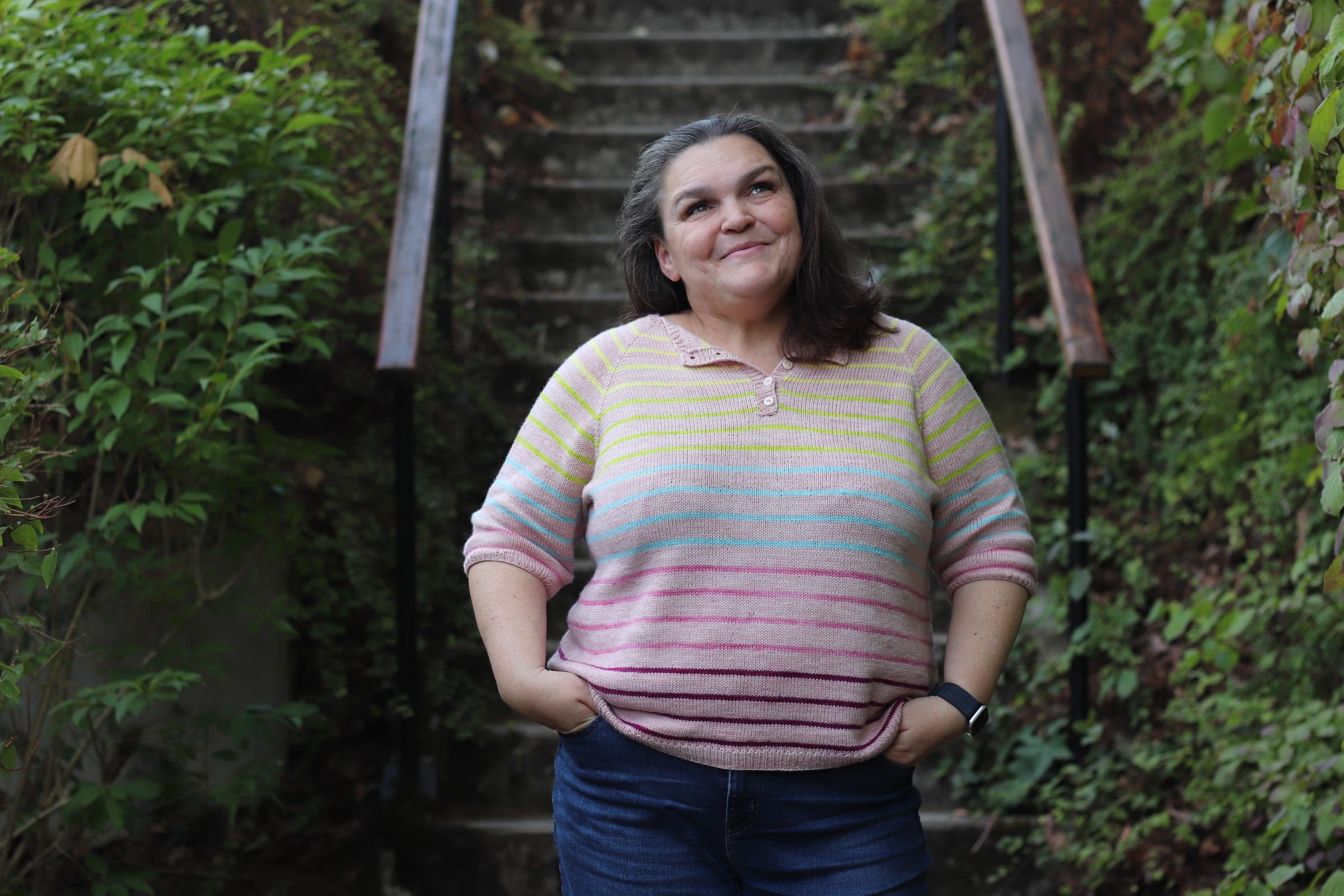
For Louët, I chose a very simple rhythm: eight rows in the main colour followed by two rows in a contrast colour.
The narrow stripes bring rhythm to the knitting without taking over. Most of all, they invite you to play with the bouquet—using a different mini skein for each stripe—or to choose a single contrast colour for a more understated version.
The prototype is knitted in Bulbe Bizarre Extra Sock. Pollen is one of the contrast shades in my version, adding the bright note that first caught my eye in the bouquet.
Shaping the neckline with a Henley placket
I did not want Louët to rely on stripes alone.
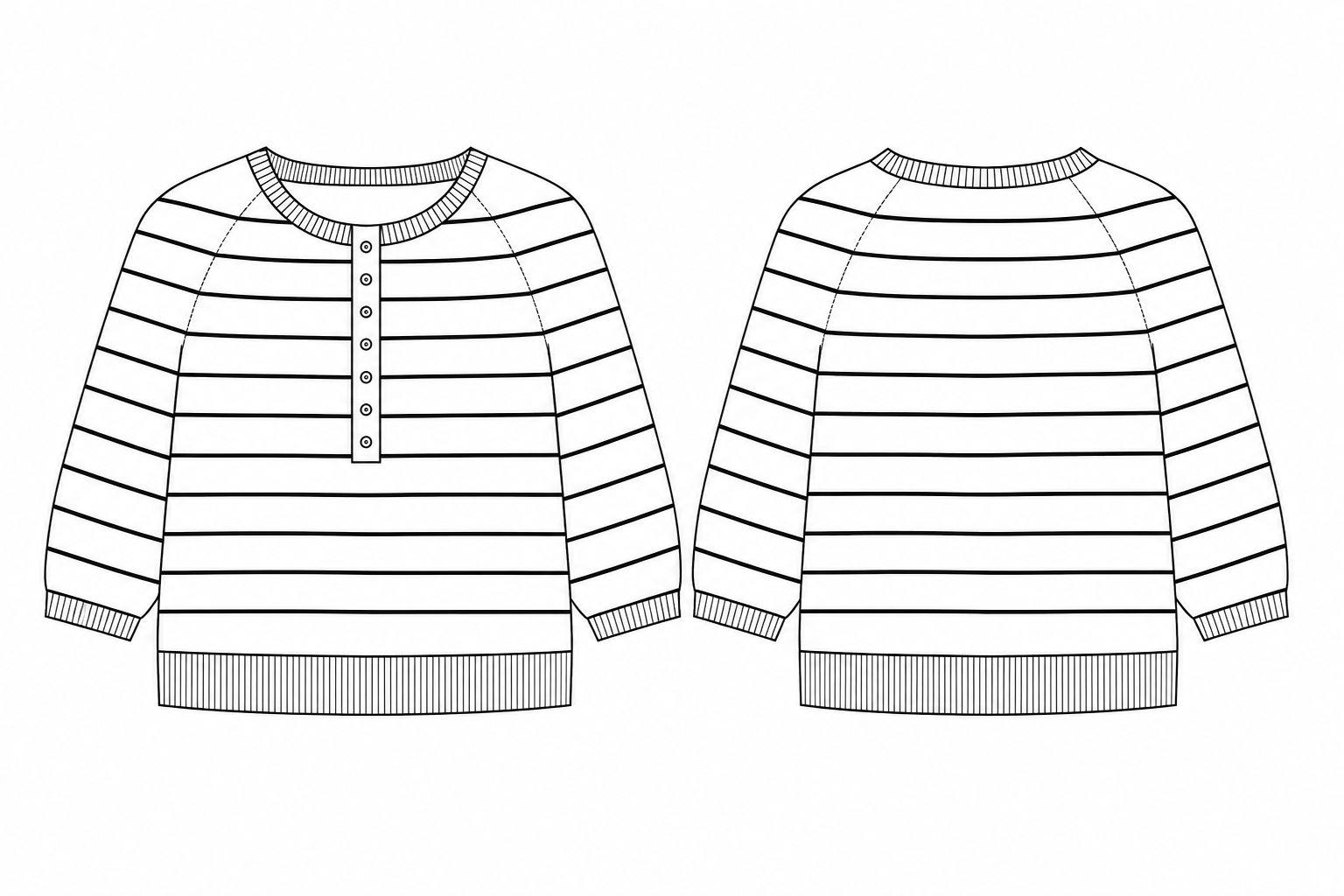
Its defining feature is a deep Henley placket, open at the centre front and fastened with a row of small buttons. It extends the round neckline, drawing a vertical line through the horizontal stripes.
This contrast is what gives the pattern its identity.
The sweater begins at the neckline and is worked from the top down with raglan shaping. The upper section is worked flat to create the Henley opening, then joined in the round once the desired depth is reached.
The button band is added later, once the body is complete. At that stage, the depth of the opening, the number of buttons and the spacing between them all need to find exactly the right balance.
These details may look discreet in the finished garment, but they are central to its design.
Finding the right volume
Louët is designed to feel roomy and enveloping, with approximately 20 cm / 8 in of positive ease.
The body stays generous before drawing in slightly at the ribbing, creating a fluid drape without losing any of that comfort.
The three-quarter sleeves follow the same principle: they retain volume at the top, then taper gradually towards the cuffs.
I wanted the silhouette to feel comfortable, not simply wide. The entire construction rests on that balance: leaving enough room for the garment to move with the body, while using ribbing and decreases to define its shape.
The pattern comes in 16 sizes, with finished bust measurements ranging from 100 to 182 cm / 39¼ to 71¾ in.
Creating your own version
Louët grew from one particular bouquet, but the pattern leaves plenty of freedom in the way the colours are combined.
The contrast stripes can be worked with several mini skeins, leftovers from earlier projects or one single shade. A soft palette will create a gently blended effect; stronger contrasts will bring the rhythm of the stripes and the Henley placket into sharper focus.
That is something else I love about this construction: the pattern sets the framework, but every choice of colour tells a different story.
Like all my Mariannières, Louët is named after a lighthouse. And like the others, it takes the familiar language of the marinière somewhere new—with a different shape, a different rhythm and a new construction detail.
Louët will be coming to your needles soon.